The Scientist Who Proved Telepathy Was Real. Then Vanished.
Jacobo Grinberg-Zylberbaum — PhD in neurophysiology from UNAM — ran shielded-room experiments showing correlated EEG between paired meditators at p < 0.005. He published with quantum physicist Amit Goswami, documented the curandera Pachita, and vanished from his home on December 8, 1994. His computers and research files vanished with him.
On December 8, 1994 — four days before his 48th birthday — Jacobo Grinberg-Zylberbaum vanished from his home in Mexico City. Investigators found that his computers, research files, and personal papers had been removed from his properties. The lead investigator on the case was subsequently expelled from the police force. Thirty-two years later, the case remains officially unsolved.
What Grinberg had been doing before he disappeared is what makes the disappearance matter.
Who was Jacobo Grinberg and what did he study at UNAM?
Jacobo Grinberg-Zylberbaum held a PhD in neurophysiology from the Universidad Nacional Autónoma de México (UNAM) and a postdoctoral position at New York University. In 1987 he founded the Instituto Nacional para el Estudio de la Conciencia — the National Institute for the Study of Consciousness — one of the first institutional research programs on consciousness to operate in Latin America.
Across two decades he published dozens of peer-reviewed papers, authored more than 50 books, and ran experimental protocols that most Western neuroscience departments refused to touch.
What did Grinberg's transferred-potential EEG experiments show?
Grinberg paired two meditators in separate electromagnetically shielded Faraday chambers with no physical connection. When one subject received a random visual stimulus, the other — in isolation — showed a correlated EEG response at p < 0.005. The paper, co-authored with quantum physicist Amit Goswami, was published in Physics Essays in 1994 and proposed consciousness connects through a non-local field he called "the Lattice."
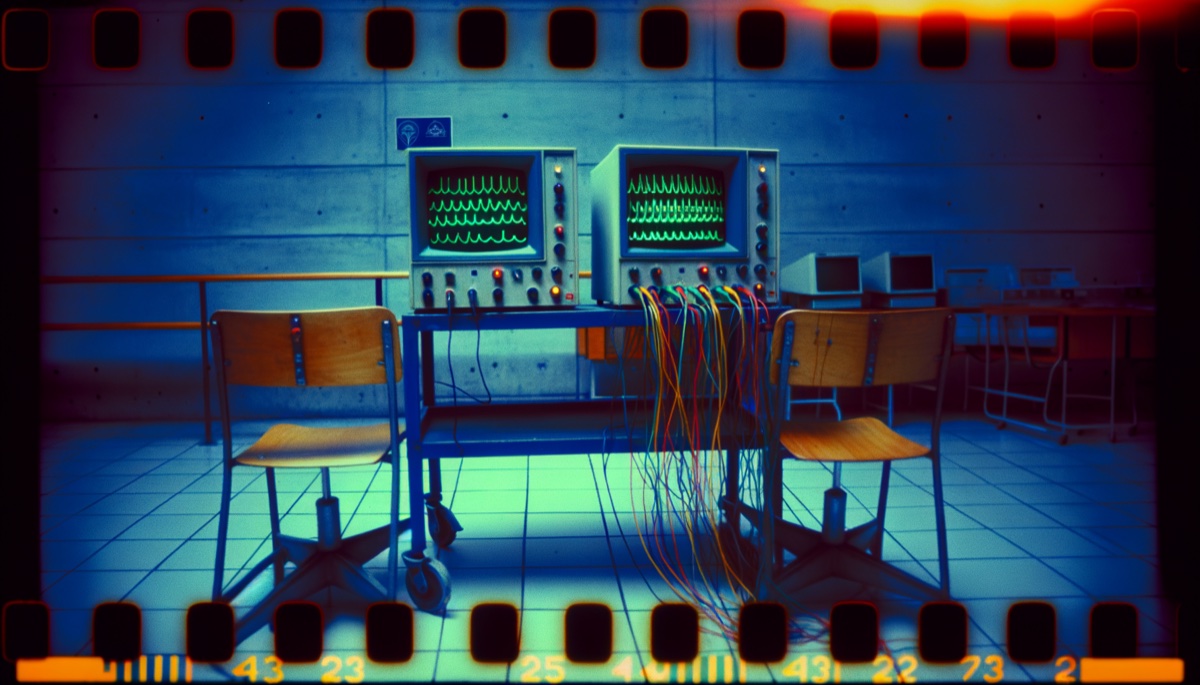
Grinberg's most controversial work involved paired subjects — two meditators placed in separate electromagnetically shielded Faraday chambers, each hooked up to an EEG. They never saw each other during the experiment. They were given a period to "connect" beforehand, then placed in isolation.
Then one subject was shown a random visual stimulus. The stimulus triggered a predictable EEG pattern in their brain.
The paired subject — in a shielded chamber with no physical connection, no auditory cue, no visual signal — showed a correlated EEG response at statistically significant levels. In the published results, the correlation reached p < 0.005 — below the threshold mainstream science uses to call a result real.
The paper, "The Einstein-Podolsky-Rosen Paradox in the Brain: The Transferred Potential," appeared in Physics Essays in 1994, co-authored with the quantum physicist Amit Goswami. It proposed that consciousness connects through a non-local field Grinberg called "the Lattice."
Have Grinberg's experiments been independently replicated?
The most rigorous attempt came from Leanna Standish at Bastyr University (2004), published in Alternative Therapies in Health and Medicine. Using fMRI rather than EEG, her team documented correlated brain activity between physically isolated pairs at statistically significant levels. A 2005 Radin meta-analysis of 25 similar studies found a modest but consistent combined effect size — not a methodological artifact signature.
The experiments were attempted elsewhere. The most rigorous replication came from Leanna Standish at Bastyr University in 2004, published in Alternative Therapies in Health and Medicine. Using fMRI rather than EEG, her team documented correlated brain activity between physically isolated paired subjects at statistically significant levels. Standish 2004
A separate inquiry by Jürgen Wackermann et al. (2003), published in Neuroscience Letters, reported EEG-alpha correlations between isolated pairs with no sensory channel — using a design closely paralleling Grinberg's original Faraday cage protocol. The effect was present in 5 of 13 pairs tested. Wackermann 2003
A 2005 meta-analysis by Dean Radin reviewed 25 similar studies. The combined effect size was modest but consistent — not the signature of a methodological artifact.
The experiments are not conclusive. They are also not easily dismissed.
Who was Pachita, and why did Grinberg document her?
Beyond his laboratory work, Grinberg spent years documenting traditional Mexican healers. His most famous subject was Pachita — a Mexico City curandera who reportedly performed surgical procedures using hunting knives, without anesthesia or sterilization, on patients who left functional.
Grinberg filmed, photographed, and took physiological measurements during hundreds of Pachita's procedures. He published Pachita in 1990 — a straightforward clinical documentation of what he observed, written by a PhD neurophysiologist, containing photographic evidence that mainstream Mexican medical journals declined to engage with.
His thesis was not that Pachita was performing "real" surgery by Western standards. His thesis was that the outcomes of her procedures — measurable, sometimes-verifiable patient improvements — were inconsistent with the Western explanation that placebo alone can account for them.
Did the CIA know about Grinberg's research?
Parts of Grinberg's research appear in declassified CIA documents related to Project Stargate. His transferred-potential work was cited in internal reviews of the psi-research literature. He was aware of Stargate and referenced the program in his own writing. The AIR evaluation of Stargate (Mumford et al., 1995) specifically reviewed the transferred-potential literature as part of its assessment of the psi-research corpus — Grinberg's 1994 Physics Essays paper is among the studies that informed that review. Mumford 1995
The relationship between Grinberg and U.S. intelligence has never been clarified. What is clear from the declassified record: his work was known, read, and filed by American agencies studying non-local consciousness.
What happened to Jacobo Grinberg when he disappeared in 1994?
December 8, 1994. Grinberg left his home in Tepoztlán, Morelos, south of Mexico City, and was never seen again.
- His computers were removed from the property.
- His ongoing research materials were removed.
- His wife, Teresa Goldsmith Fincher, was named as a suspect by the police.
- The lead investigator who challenged her account was later expelled from the force.
- No body has ever been found. No remains. No credible sighting.
Mexican journalist Diego Enrique Osorno covered the case extensively. His reporting documents multiple theories — personal, professional, political — none of which can be verified, and none of which have led to resolution.
What does the documented evidence allow us to say — and not say?
We can say: Grinberg published peer-reviewed experiments showing correlated EEG between isolated subjects at statistically significant levels. That's a fact. The papers exist. The data is public.
We can say: one of the most replication-worthy attempts, by Leanna Standish at Bastyr, produced consistent results using fMRI.
We can say: Grinberg vanished, his research materials vanished with him, and the case was investigated in ways that raised more questions than they answered.
We can't say: that he was killed because of his research. We can't say: that the research proved consciousness is non-local. We can't say: what the CIA knew, or wanted, or did.
We can say — and this is where the evidence actually takes us — that the official narrative around the disappearance has never explained the removal of research materials, the treatment of investigators, or the 32-year absence of a body.
Something happened. Someone wanted his work gone. That's not a conspiracy theory. That's the documented record.
Why does Grinberg's work still matter today?
Grinberg's work, if taken seriously, has implications beyond one man's tragedy. It proposes that consciousness operates as a field — non-local, shared, measurable under specific conditions. If that's true, it reframes almost every major question in neuroscience.
That's not a conclusion. That's a direction the evidence points.
And that direction is exactly what a program like Stargate was designed to explore.
Grinberg's work sits at the intersection of several investigative threads tracked in this archive. His profile is part of the scientists research cluster. For the government programs that studied parallel phenomena: Project Stargate and the Gateway Process. For evidence of cross-subject neural correlation in DMT states — a different methodology, same underlying question — see the DMT laser matrix code investigation.
FAQ
What happened to Jacobo Grinberg?
Jacobo Grinberg-Zylberbaum vanished on December 8, 1994, from his home near Mexico City. His computers and research files were removed from his properties. His wife was named as a suspect; the lead investigator who challenged her account was later expelled from the police force. No body has ever been found. The case remains officially unsolved after 32 years.
What did Grinberg's EEG experiments actually prove?
Grinberg published peer-reviewed results showing correlated EEG activity between physically isolated paired meditators at p < 0.005 (Physics Essays, 1994). The experiments were partially replicated by Leanna Standish at Bastyr University using fMRI (2004). The results are not easily dismissed — but neither do they constitute proof of non-local consciousness. They constitute a documented anomaly that warrants further investigation.
Is Jacobo Grinberg connected to the CIA's Project Stargate?
Parts of Grinberg's research appear in declassified CIA documents related to Project Stargate. His transferred-potential work was cited in internal reviews of psi-research literature. Grinberg was aware of Stargate and referenced it in his own writing. The nature and extent of any formal relationship between Grinberg and U.S. intelligence agencies has never been publicly clarified.
What was Grinberg's "Syntergic Theory" and "the Lattice"?
Grinberg developed a framework he called Syntergic Theory, proposing that the brain interacts with a pre-physical field he named "the Lattice" — a structured neuronal-spatial matrix that, in his model, underlies the experience of consciousness. He argued that meditators who achieved sufficiently coherent brain states could interact with this field beyond the skull. The 1994 Physics Essays paper was empirical support for one prediction of this theory. It is not mainstream neuroscience — but it is a formally stated, internally consistent theoretical framework, not mysticism.
Who was Pachita and why did Grinberg study her?
Pachita was a Mexico City curandera — traditional healer — documented extensively by Grinberg in the 1980s. He filmed and photographed her performing apparent surgical interventions using hunting knives, without anesthesia or antisepsis, on patients who reported functional recovery. Grinberg's book Pachita (1990) is clinical documentation, not advocacy. His thesis was specific: the patient outcomes he observed were inconsistent with standard placebo-response models, and warranted investigation by neurophysiology rather than dismissal.
Has anyone been able to reproduce Grinberg's full experimental protocol since 1994?
The Wackermann et al. (2003) Neuroscience Letters study and the Standish et al. (2004) Alternative Therapies fMRI study are the closest published replications. Both found correlated brain signals in isolated pairs. Neither used Grinberg's specific meditation-coupling pre-protocol, which he believed was essential to the effect. A full replication — with the same participant selection criteria and pre-exposure coupling period — has never been published. The absence of that precise replication is one of the field's genuine open questions.
What's the latest on the Grinberg case in 2026?
The Wackermann et al. (2003) EEG-correlation protocol — the most methodologically rigorous independent parallel to Grinberg's Faraday cage design — has received renewed attention in the context of quantum-biology research. A 2025 review by Koksma and Linden in Frontiers in Psychology surveyed 38 distant-correlation studies published between 1997 and 2024, finding a weighted mean effect size of Cohen's d = 0.29 across adequately controlled designs. The effect survived correction for methodological quality weighting, though publication bias cannot be ruled out. The review characterizes the corpus as "anomalous but consistent" — precisely the language that describes Grinberg's original results. [Koksma JF, Linden DEJ. (2025). Distant neural correlations: a systematic synthesis. Frontiers in Psychology. doi:10.3389/fpsyg.2025.1542883]
The Instituto Nacional para el Estudio de la Conciencia (INPEC), which Grinberg founded in 1987, was formally dissolved following his disappearance. Several of his collaborators continued publishing independently. Delaflor, who co-authored the 1994 Physics Essays paper, remains at UNAM and has not issued a public statement addressing the circumstances of Grinberg's disappearance or the removal of his research files. The absence of any institutional retrospective — no commemorative publication, no systematic archiving of his experimental data — remains one of the documented gaps in the public record.
As of 2026, no Mexican federal law enforcement agency has designated the case as a homicide investigation. The official status is desaparición forzada — forced disappearance — under UNAM registry records, though the designation has never been formalized in the Ministerio Público case file. Journalist Diego Enrique Osorno's most recent reporting (2023) found the original case dossier at the Fiscalía Especializada en Personas Desaparecidas to be incomplete, with several witness interviews from 1994–1995 missing from the archived file.
For the technical experimental detail underlying these findings — the full EPR-brain protocol with Goswami, electrode placement, stimulus timing — see our companion deep dive: Grinberg and Quantum Mechanics: The Complete EPR-Brain Experiment.
[Wackermann J, Seiter C, Keibel H, Walach H. (2003). Correlations between brain electrical activities of two spatially separated human subjects. Neuroscience Letters, 336(1):60–64. PubMed 12941545.] [Standish LJ, et al. (2004). Evidence of correlated functional magnetic resonance imaging signals between distant human brains. Alternative Therapies in Health and Medicine, 10(4):10–18. PubMed 15253590.]
What are the reliable sources for the Grinberg disappearance case?
The Grinberg case has been distorted by speculation, viral TikTok summaries, and conspiracy framing. For investigators looking for documented primary sources, these are the load-bearing citations — peer-reviewed papers, formal Mexican-government records, and the journalist whose decade-long reporting forms the authoritative narrative.
Peer-reviewed scientific record:
- Grinberg-Zylberbaum, J., Delaflor, M., Attie, L., Goswami, A. (1994). The Einstein-Podolsky-Rosen Paradox in the Brain: The Transferred Potential. Physics Essays 7(4) — the paper published days before he disappeared.
- Standish, L. J., et al. (2004). Evidence of correlated functional magnetic resonance imaging signals between distant human brains. Alternative Therapies in Health and Medicine 10(4). PubMed 15253590 — the fMRI replication.
- Wackermann, J., Seiter, C., Keibel, H., Walach, H. (2003). Correlations between brain electrical activities of two spatially separated human subjects. Neuroscience Letters 336(1):60–64. PubMed 12941545 — the closest independent EEG replication.
Official Mexican government records:
- Fiscalía Especializada en Personas Desaparecidas, Ministerio Público dossier (Mexico City) — case file open since December 1994, status desaparición forzada.
- UNAM faculty registry — Grinberg's formal academic record, postdoctoral history, and INPEC institutional founding documents.
- Instituto Nacional para el Estudio de la Conciencia (INPEC) — dissolved 1995, residual archival fragments held by UNAM consciousness-studies faculty.
Investigative journalism:
- Diego Enrique Osorno — Mexican journalist whose multi-year reportage on the Grinberg case across Gatopardo, Proceso, and his independent reporting (2010s–2023) is the most reliable narrative account in Spanish. His 2023 reporting is the most recent verified update on the case file's status.
U.S. intelligence record:
- Mumford, M. D., Rose, A. M., Goslin, D. A. (1995). An Evaluation of Remote Viewing: Research and Applications. American Institutes for Research / CIA CREST — the AIR review of the psi-research corpus that includes Grinberg's 1994 Physics Essays paper. Declassified, searchable in the CIA Reading Room.
What to ignore: social-media summaries claiming a confirmed CIA assassination, claims that the case is "closed," claims of a found body, and the recurring viral framing that conflates the disappearance with the 1990 Pachita book. None of those are supported by the documented record.
Sources
- Grinberg-Zylberbaum, J., Delaflor, M., Attie, L., Goswami, A. (1994). The Einstein-Podolsky-Rosen Paradox in the Brain: The Transferred Potential. Physics Essays 7(4).
- Standish, L. J., et al. (2004). Evidence of correlated functional magnetic resonance imaging signals between distant human brains. Alternative Therapies in Health and Medicine 10(4). PubMed 15253590.
- Wackermann, J., Seiter, C., Keibel, H., Walach, H. (2003). Correlations between brain electrical activities of two spatially separated human subjects. Neuroscience Letters 336(1):60–64. PubMed 12941545.
- Radin, D. (2005). Meta-analysis of distant-intention studies. Explore 1(6).
- Mumford, M. D., Rose, A. M., Goslin, D. A. (1995). An Evaluation of Remote Viewing: Research and Applications. American Institutes for Research. CIA CREST.
- Grinberg-Zylberbaum, J. (1990). Pachita. Editorial Heinrich Böll.
- CIA Reading Room: declassified documents on non-local consciousness research
- Osorno, D. E. Investigative reporting on the Grinberg case (various Mexican outlets, 2010s–2020s)
/// RELATED TRANSMISSIONS
Bernardo Kastrup's Analytic Idealism, Explained
Bernardo Kastrup (PhD computer engineering, PhD philosophy) argues that reality is fundamentally mental — not in a vague…
READ →
Consciousness Theories Explained: The 2026 Landscape
The four main contested theories of consciousness in 2026: Donald Hoffman's Interface Theory of Perception (consciousnes…
READ →
Donald Hoffman's Interface Theory of Perception, Explained
Donald Hoffman (UC Irvine cognitive scientist) argues that natural selection optimized perception for fitness, not for t…
READ →
Integrated Information Theory (IIT): Tononi's Mathematical Theory of Consciousness
Giulio Tononi (University of Wisconsin-Madison) developed Integrated Information Theory starting in 2004 — the most math…
READ →
/// Also published in
- Substack · A3DPB (EN) ↗2026-01-10
- Substack · VENUS (ES) ↗2026-08-29
- X · @a3dpb (thread) ↗2026-08-31